Showing posts with label Vegetables. Show all posts

Wednesday, February 22, 2023

Scientific Reasons You Should Resolve to Start Gardening in 2023 by Nancy Shepard


Professor Jill Litt (right) checks on a plant with colleague Erin Decker (left) at a community garden next to Regis University. Photos by Glenn Asakawa/CU Boulder, 2017

We’ve all heard the anecdotal evidence of gardening improving people’s health but up until now, few studies have scientifically tested gardening’s effects on disease risk factors. Our own University of Colorado did that and the findings were published Jan. 4 in the journal Lancet Planetary Health and Science Direct.

Wednesday, August 3, 2022

My Vegetables Are Too Hot! by Nancy Shepard

Shade screen over vegie garden. Photo by Nancy Shepard

With recent hot weather hitting 96 degrees before 10 am, I knew my vegetable garden would struggle. I remembered a presentation on growing vegetables in Colorado by Darrin Parmenter with CSU Extension in La Plata County several years ago. I was surprised to learn that tomato plants fail to produce if daytime temperatures get above 90 degrees by 10 am. He said the blossoms would abort their attempt to produce fruit. He also said that peppers were similar to tomatoes with mild peppers' optimal temperatures between 65-90 degrees and hot peppers' optimal temperatures between 75-90 degrees. And even my heat-tolerant lettuces will start to bolt and become bitter when temperatures are above 80 degrees.

Thursday, August 20, 2020

The Top Ten Vegetables to Plant in August by Patti O'Neal


Photo Courtesy Pixabay

There is still time and August is a great time to get another round of crops into the ground for a bountiful fall harvest.  The first average frost date along the front range as been around the 2nd week of October for most of the past decade.  This gives you nearly 90 days of growing time.  In that time, you can have a bounty of vegetables to enjoy all through fall. 

Monday, May 11, 2020

Interested in Growing Your Own Food This Year? by Rita Stafford

CSU - Planttalk Colorado
Establishing your own vegetable garden can be done very economically depending on your choice of materials and the size of your project. The benefits of growing your own food range from...

Thursday, April 9, 2020

Vegetable Miracles in the Snow by Nancy Shepard

Photo: Nancy Shepard

With such nice weather last week, I cleared a space in my garden for planting some cool-season veggies:
·      Arugula (Eruca vesicaria ‘Rocket’)
·      Spinach (Sinacia oleracea ‘Lavewa’)
·      Snap Peas (Pisum sativum ‘Sugar Snap’)
·      Snow Peas (Pisum sativum ‘Oregon Sugar Pod II’)

Monday, March 23, 2020

Housebound? Grab your camera and head outside with the children by Vicky Spelman


Photo: Vicky Spelman ~ Poppies

Encourage your family and friends to garden – get them started by photographing what is going on in your yard and what you are growing.  Or what new Spring flowers are popping up.  Everyone loves seeing daffodils and the early bulbs blooming. 

Friday, August 9, 2019

Time to Plan and Plant the Fall Vegetable Garden by Patti O'Neal

Swiss Chard by Carol King
Colorado is well suited to fall gardening and winter harvest. While weather often dictates the length of the season, eleven months is not out of the question for Front Range gardeners. Imagine harvesting spinach for a great salad in November!

If you’ve never tried fall gardening, here are 5 reasons why you should.

1.  Gardens can be any size – So anybody can do it.
Fall crops are primarily greens and root crops, so they are very well adapted to container gardening, table top raised beds, and raised beds of all kinds.  Start with one container of spinach this year, you’ll catch the bug and increase it next year.

2.  There are many vegetables that thrive in fall Front Range gardens and can be planted now.
Beets, broccoli, carrots, cauliflower, kale and chard can all be planted now.  August is the best time to plant arugula, cabbage, endive, spinach, cilantro and in September you can plant bush peas, radishes, Chinese greens, more spinach and lettuce and the list goes on. My fall garden has no fewer than 5 varieties of spinach, 10 varieties of lettuce and 4 Chinese vegetables, like Pac Choi and Bok Choi  and 3 kales to name a few. September or October is the time to plant garlic.

3.  Fall crops thrive in cooler weather and many fall crops are frost tolerant.
Cool crop vegetables develop their prime flavors when the ambient temperatures are cooler.  Get them germinated and up now so it is cooler when they begin to mature. 

4. Fall crops do not need a full 8 hours of sun each day.
Crops still require sun to photosynthesize these leafy vegetables are designed to thrive in less than 8 hours of full sun.  If you did not have the right place for tomatoes, you may have the perfect place for a pot of spinach, lettuce or chard which all will do well with 5-6 hours of light.

5.  Season protection is easy to obtain and apply.
There are many ways to protect your crops whether they are in containers or raised beds or even in ground that can be left on and removed for harvest or quickly applied if a frost happens.  These can be frost blankets, horticultural fabrics, cloches and even having a supply of old sheets handy if applied correctly. 

Why not try your hand at fall gardening? Having a fresh organic salad grown in your own garden for Thanksgiving will be a real treat! 

Wednesday, May 15, 2019

Hardening Off and Transplanting Seedlings

Seedling Photo by Brooke Coburn
It is time to begin to transplant tender seedlings outdoors, and seedlings that have grown indoors up to this point need special treatment before being planted outdoors. These seedlings are used to lower light levels, protection from the elements, and ample water. So they will need to adjust gradually to the outdoor environment, a process called hardening off.
Hardening Off
Photo Brooke Coburn
Shade for new seedlings by Brooke Coburn
About a week before transplanting, begin placing the seedlings outdoors for a few hours each day. Place the plants in a location with light shade and protection from the wind so as to avoid scalding and wilting. A shade cloth, tree, or trellis can provide adequate shade. Each day, gradually increase the amount of time the seedlings spend outdoors until they can be left out even overnight. Keep a careful watch on the weather forecast, however, and be sure to bring the seedlings inside if temperatures are going to dip near to freezing.
Transplanting
Transplant seedlings on an overcast, cool day, if possible, after the danger of frost has passed. Loosen the soil and dig a hole for the transplant. Carefully remove the seedling from the pot, keeping as many of the roots intact as possible. Place the roots in the hole and move loose dirt back around to support the stem of the plant. Water right away with a solution of half strength fertilizer. Keep newly transplanted seedlings well-watered for the first three to four weeks after transplanting until they develop a larger root system.
Summary
Gradually acclimate seedlings to the outdoor environment by providing protection from sun and wind. Transplant on a cool, overcast day, and continue to provide sufficient water until the root system has developed. See the links below for more information and to find your local frost dates.
Sources
Buying and Hardening Seedlings http://www.ext.colostate.edu/ptlk/1802.html


Wednesday, March 20, 2019

Spring Equinox in Colorado 2019 by Carol King

Photo by Carol King
The first day of spring brings joy to every gardener’s heart marking the beginning of the gardening season in the Northern Hemisphere. It is the unofficial time to start our gardens and regardless of the weather, we’re ready! Spring arrives here along the Front Range of Colorado on Wednesday, March 20, 2018 at 3:58pm MDT. This is also called the vernal equinox.

There are two equinoxes every year –  March and September – when the sun shines directly on the equator and the length of the night and day are nearly equal. (In reality equinoxes don't have exactly 12 hours of daylight, but close enough.) The March equinox marks the moment the sun crosses the celestial equator – the imaginary line in the sky above the Earth’s equator – from south to north. This happens on March 19, 20 or 21 every year.

Friday, February 15, 2019

Check Soil Temperature Before Planting Vegetable Seeds

Photo courtesy vegetable gardener.com

More important than moon signs and more predictable than weather is another variable which drastically affects how seeds and transplants grow - soil temperature. Soil temperature is a factor which few of us consider important enough to check before planting yet it is probably the most important factor affecting seed germination, stand establishment and seedling growth. The following guidelines are provided by Dr. Jerry Parsons, Extension Horticulturist at Texas Agricultural Extension Service.

Saturday, February 2, 2019

What is a Heirloom Plant?

Heirloom tomatoes, photo courtesy Burpee.com

The following information was excerpted from What are Heirlooms, University of Nebraska Extension in Lancaster County, Sarah Browning, UNL Extension Educator.

Most gardeners are aware of the increasing interest heirloom vegetables have received in recent years. Just visit your local farmer's market in the summer and you're likely to find a wide variety of heirloom vegetables available with many unique shapes and colorations. But exactly what are heirloom plants?

Friday, October 12, 2018

Fall Cleanup Tips for the Vegetable Garden by Peter Drake

Photo courtesy PlantTalk Colorado

Whether you have made a vegetable garden in a raised bed, an in-ground bed, or a container, now is a very good time to plan for how you can clean up your garden, and put it in order for the winter months to better ensure that, come next year’s planting, your garden will possess good health and balanced nutrition.

Wednesday, October 3, 2018

It's National Kale Day!

Photo courtesy National Kale Day

Did you know that today is National Kale Day? Here’s some information from the website.

National Kale Day celebrates kale’s incredible health benefits, highlights kale’s culinary versatility, and promotes eating, growing and sharing kale throughout America. National Kale day is the first Wednesday in October and is an annual celebration.

Thursday, September 13, 2018

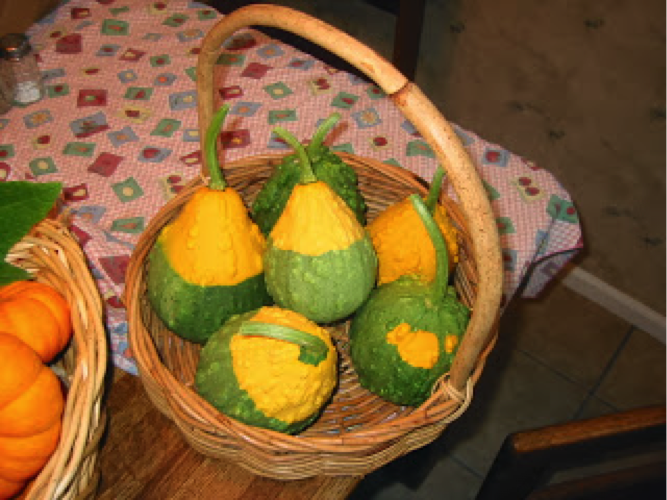
Colorful and Curious Gourds Provide Fall Interest by Joyce Agostino


Photo by Joyce D'Agostino

Every year when I plan my garden, I try to add a few items such as gourds, pumpkins and ornamental corn that will add some end of the season color and fun. Gourds are easy to grow and can be functional as well as decorative.

Tuesday, September 4, 2018

Harvesting Peppers in the Fall by Joyce D'Agostino

Early Jalapeño Pepper, photo by Joyce D'Agostino
If you have grown sweet or hot peppers this season, now is the time to prepare to harvest. Peppers are tender annuals that will not tolerate frost.

Many peppers begin green and then will turn color as they mature or ripen. The taste and heat of the pepper can vary from the green state to when they turn a color. If your peppers are the hot variety, refer to the seed packet information to learn the Scoville units that rates the heat of the pepper. 

Friday, March 30, 2018

Time to Start Tomato Seeds Indoors Along the Front Range Colorado

Quick to germinate and grow, tomato seeds are best sown indoors about six weeks before the average last frost date. People in the Denver metropolitan area normally use Mothers' Day as a guide for when to plant. However, Denver had its last spring freeze on April 5 in 1977 and on June 8 in 2007. The average over the last ten years is May 5. Using May 13, 2018 Mothers' Day as a planting date, tomato seeds can be started indoors the first week of April.

Here's a great guide on starting tomato seeds indoors from Modern Farmer: 
Colorado State University Vegetable Planting Guide. 


Wednesday, September 27, 2017

Harvesting and Storing Vegetables by Donna Duffy


The seasons are certainly changing in Jefferson County, Colorado. It's time to harvest the  vegetables still growing in your garden.  Following are several tips to prolong your harvest of root crops, squash, pumpkins, cabbage, celery, kale and collard greens.

Harvesting
  • Root Crops can remain where they are grown until there is a danger of soil freezing. Postpone harvesting by hilling the soil over the shoulders of carrots and beets to protect from freezing. If straw and soil are piled over the row as insulation, harvest may be delayed even longer.
  • Harvest onions soon after the tops fall over. Pull the onions, remove the tops, and cure the onions in mesh bags or crates where they have good air circulation until the necks dry down. When they rustle upon handling, they are ready to move to a cool, dry storage area.
  • Do not harvest winter squash and pumpkins until the vines are frost-killed and the skin is hard to the thumbnail. Leave stems on the fruit to protect against disease invasion.
  • Celery and late cabbage may be harvested after the frost has stopped their growth. Pull celery with its roots attached. Cut cabbage and remove the loose outer leaves.
  • Kale and collards can be left in the garden long after the first fall frost. Harvest as needed until the foliage finally succumbs to cold weather.

Monday, September 25, 2017

Fall Vegetable Garden Cleanup by Audrey Stokes

Photo by Audrey Stokes
You and your fall garden benefit when you give your plants the same TLC in fall as you do in spring and summer. A vegetable garden left unattended through winter provides a cover for pests and disease. 
Plant disease agents such as bacteria, fungi and viruses all remain alive, though dormant, during the winter months. By recognizing the places where these organisms hide, gardeners can often destroy them and prevent disease outbreaks the following spring. Many fungi spend the winter on or in old leaves, fruit and other garden refuse. These fungi often form spores or other reproductive structures that remain alive even after the host plant has died. Cucumber and squash vines, cabbages, and the dried remains of tomato and bean plants are all likely to harbor fungi if left in the garden over the winter.
Insects, too, survive quite nicely over the winter months. Cucumber beetle, Colorado potato beetle and Mexican bean beetle all overwinter as adults. In spring they migrate to young plants where they feed and lay eggs for a new generation. Insects and plant pathogens survive on weeds as well as on garden plants. Many weeds serve as alternate hosts for insects and fungi, helping them to complete their life cycle. Destruction of these weeds removes a source of future troubles.

Monday, August 7, 2017

Growing Your “Third Season” Crops By Joyce D’Agostino

Leafy Green Vegetables photo Colorado State University
By now, many gardeners are enjoying the bounty of their warm season vegetables such as tomatoes, green beans and cucumbers. However we do know that these vegetables do not tolerate frosts well and their production will be done in the fall.

If you would like to continue to harvest into the fall, there is still time to plant a few hardy garden crops. Many of these vegetables are very nutritious and will help extend your garden harvests even after some frosts.

Kale and collard greens are very cold tolerant and can be planted now. Be sure to review the attached bulletins for suggested varieties. You will want to choose those that do not take more than about 60 days to maturity, to allow them to produce before the killing frosts. For the best results, choose those that have been tested in our area for best production, hardiness and flavor.

Many cold season tolerant plants such as the brassicas and collards tolerate light frosts and in fact the flavors are enhanced when they are exposed to a light frost. As you can see in the kale bulletin below, it is recommended to plant kale in the front range area in the fall rather than in the spring to get the sweetest flavor and texture. There are a few other favorites such as radishes, carrots, lettuce, spinach and turnips that also tolerate cooler weather and in fact with some protection may continue to produce well into the late fall.

For more information about growing cold tolerant vegetables and extending your garden production, see the bulletins below:


Monday, July 31, 2017

Do You Have Ripe Tomatoes Yet? By Joyce D’Agostino

Photo by Joyce D'Agostino

Do you have the best tomatoes on your block – but they’re still green? Are you wondering when you will get that first ripe tomato?

You’re not alone with these concerns. It seems many of us work hard to get our tomatoes started so that they are strong healthy plants when you are ready to set them outside, with the hope of early and abundant harvest only to find that they are slowed down by weather issues.  It seems we get by the cold and wet springs only to suddenly be exposed to the hot and dry late spring and summer weather.