Showing posts with label Plant Diseases and Problems. Show all posts

Friday, September 7, 2018

The Aster Yellows Blues by Carol King

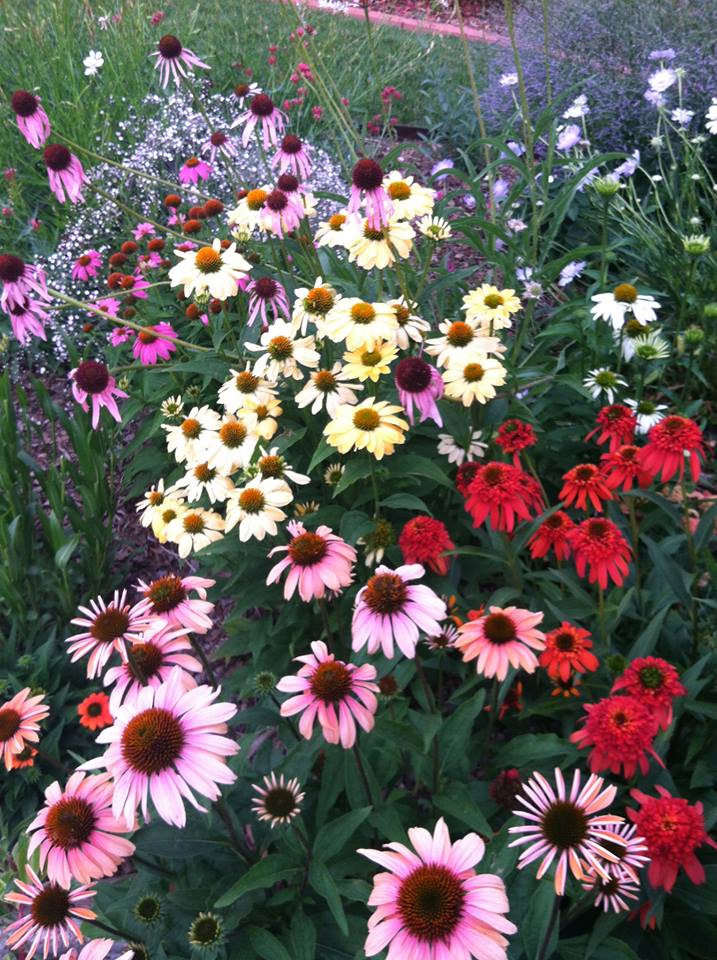
Echinacea varieties, photo by Donna Duffy

My latest indignity in the garden, (does it never end) is aster yellows in a cone flower, Echinacea purpurea.  A couple of years ago I noticed a Dr. Seussian blossom with funny shaped green things coming out of the flower. My research led me to this condition called aster yellows.

Monday, July 30, 2018

Summer Mystery: Powdery Mildews by Olivia Tracy

Photo courtesy of M. Grabowski, UMN Extension
If you’ve gone out to your peonies and found that they look like someone dusted them with talcum powder, you likely have a case of powdery mildew. Varieties of powdery mildew can affect almost every type of plant (although particular infections are host-specific), and the leafy portions of the plant are typically most affected. The original whitish-gray, powder-like growth will eventually turn brown, and then black, and can ultimately cause leaves or buds to drop off the plant.

Tuesday, July 10, 2018

What's Bugging my Roses? by Donna Duffy

It’s that time in early summer when roses come into full bloom. Their beauty and fragrance make them the superstars of the early summer garden. Undeservedly, roses have a reputation for being difficult to grow. In fact, very few rose diseases are found in typical Colorado growing conditions, primarily due to our high altitude and dry conditions. Even so, your roses may become afflicted with a rose pest or disease. Here are four common rose problems and their controls, courtesy of the Denver Rose Society.


Saturday, June 23, 2018

Controlling Slugs in the Garden by Carol King

Photo CSU Extension
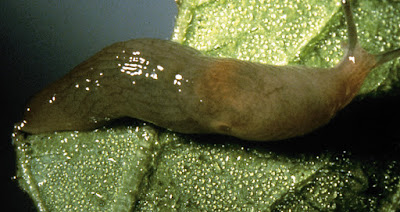
The wet spring and continuing storms have provided a banner crop of sugs in gardens along the Front Range of Colorado.  I see their slime trails each morning glistening in the sunshine and see evidence of their voracious eating habits on my hostas in particular.

Slugs are very destructive and difficult to control. Seedlings of many vegetables and flowers are favored foods, and they feed on many fruits and vegetables prior to harvest. Even the slime trails produced by slugs can contaminate garden produce.

Dr. Whitney Cranshaw, Professor and Extension Specialist of Entomology at Colorado State University recommends the following:

9
Photo gardenmyths.com

Techniques for Slug Control:
Reduce moisture in the garden. Slug populations depend on moisture in the garden to thrive.  Any effort  to reduce the amount of moisture will help with the problem.  Use of drip irrigation and soaker lines and overhead watering early in the day will help reduce the humidity they thrive on.
Remove hiding places for slugs. Removing surface debris,avoiding organic mulches (straw, grass clippings) increasing air movement around plants and using trellises and wider plant spacing will help in reducing slug populations.
Use traps or trap boards to kill or concentrate slugs. Slugs are attracted to chemicals produced by many fermenting materials. Thus pans of beer or sugar-water can attract, trap and drown slugs. Place them throughout the plant to reduce slug populations. Alcohol is not the attractant to slugs; its the yeast fermenting in the beer. Boards and wet newspaper placed on the soil surface will have slugs that seek shelter under them. Check these shelters every morning and kill any slugs found.
Plant trap crops to divert slugs from main crops. Slugs love some plants more than others so planting them will divert slugs from your prized plants. Good trap crops include: green lettuce, cabbage, calendula, marigolds, comfrey leaves, zinnias and beans.
Use repellents or barriers. Slugs don’t like to travel over abrasive materials. Diatomaceous earth, wood ashes and similar materials placed around plants provide some protection. These materials must be kept dry however. 
Apply baits according to label directions. Molluscicides are pesticides effective against slugs and snails, and are offered for sale in most garden centers. Read labels carefully and apply as directed.  Many of these are harmful to pets and other wildlife and cannot be used on vegetables. Metaldehyde is the most commonly used and effective molluscicide. It is sold often in the form of granular baits (Bug-Geta, etc.) or as a paste or gel (Deadline, etc.) It is not to be used in the vegetable garden and is harmful to dogs in particular.  An alternative bait that recently has become available includes iron phosphate (ferric phosphate) as the active ingredient. Trade names include Sluggo, Slug Magic and Escar-Go!, among others. Iron phosphate products can be used around edible crops and do not pose special hazards to dogs. Ammonia sprays make excellent contact molluscicides, but must be applied directly to exposed slugs. Household ammonia, diluted to a 5 percent to 10 percent concentration, is effective for this purpose.

For more information about slug control read this fact sheet: http://www.ext.colostate.edu/pubs/insect/05515.html


Monday, March 12, 2018

Winter Desiccation of Evergreens

Winter desiccation, photo courtesy Purdue University
It’s been a typical Jefferson County winter with periods of warm, windy, low-humidity days with no snow cover and extended dry periods. This contributes to “winter desiccation” on needled and broadleaved evergreens. Last year’s transplants are especially prone to winter desiccation (also called winter burn) under these conditions.  As the plants hold their leaves, they continue to transpire which becomes difficult during warm, dry winter periods. Below ground, small “hair roots” may die in dry soils leaving roots unable to replace lost leaf moisture.

Tuesday, February 6, 2018

Squirrel Damage in the Landscape

Photo courtesy Plantalk Colorado
Today I counted 6 squirrels frolicking and playing in my elm trees, and spotted another three in my neighbor's yard. Squirrels can cause a lot of damage in the garden, especially in years when untimely spring frosts (like we had in 2017) cause poor crops of crab apples and other fruits. Plantalk Colorado offers the following information about squirrel damage to trees and landscape plants.

Friday, July 28, 2017

Tomato Problems: Bacterial Diseases in Tomatoes by Mary Small

Photo by bitkisagligi.net
Photo by flickrhivemind.net
Moist weather in spring and summer can contribute to the development of bacterial diseases on tomatoes, just like it does for fireblight. The two diseases most often seen in moist years are bacterial speck (Pseudomonas syringae pv.tomato) and bacterial spot (Xanthomonas campestris pv. vesicatoria).

Leaf symptoms look the same for both diseases. Small water-soaked spots form and grow to about 1/8” in size with yellow halos. The centers are light brown and often tear; yellow halos are common. On more mature plants, infections are concentrated on the older foliage. Spots may also appear on the fruit pedicels.

Tuesday, July 25, 2017

Tomato Problems: Blossom End Rot by Carol King

Blossom end rot, photo courtesy CSU Extension

It seems like there is lots of tomato conversation lately about blossom end rot. So what is this nasty sounding ailment? It starts at the end where the blossom was and begins turning tan, then a dry sunken decay sets in. The lesion enlarges, turns to dark brown to black and becomes leathery. Thus the blossom end begins to rot.

It shows up especially in the first fruit of the season and after the fruit is well on its way to development. In severe cases, it may completely cover the lower half of the fruit. Both green and red fruit develop it. It’s not a pest, parasite or disease process but is a physiological problem caused by a low level of calcium in the fruit itself. In other words, dear gardener, IT’S ALL YOUR FAULT!

Monday, March 21, 2016

The Right Plant for the Right Place by Rebecca Anderson

Photo courtesy gardeningabout.com
When Master Gardeners and Extension horticulture staff are helping people with plant problems, we usually start with the soil.  It is thought that 80% of plant problems are related to soil issues.  We like to start with soil testing to find out if there are any deficiencies or excesses in the soil that can be corrected so plants will grow better.  But what happens when the soil test doesn't show problems and your plants still aren't thriving?  What else could be going on?

Wednesday, August 12, 2015

Common Garden Diseases and Solutions by Mary Small


POWDERY MILDEW- White or gray, flour-like substance on leaves, stems, flowers. Thin plant if growth is dense. Keep water out of plant canopy or apply it when it will dry fast. Apply sulfur or potassium bicarbonate or horticultural oils at first sign of mildew.


EARLY BLIGHT(tomato)- Lower leaves yellow; spots of concentric rings found on lower leaves. Keep water off foliage, or apply when it will dry fast. Chlorothalanil fungicide may be applied at first sign of infection.


FIREBLIGHT(crabapple)- Stem tips brown, bend over like shepherd’s crook and shrivel. Drops of bacterial ooze on branches. Prune branch 6-12 inches below visible signs of infection. Treat pruning tool between cuts with 1:9 bleach mixture or rubbing alcohol. (Clean tools when done.) Thin tree branches. Avoid over-fertilization.


CYSTOSPORA CANKER(aspen, cottonwood)-Sunken discolored areas on trunk and/or branches. Dark “pimples” found in cankered area. Branch dieback. Prune out affected branches below visible signs of infection. Keep tree healthy.


LEAF SCORTCH-Leaves brown on edges and in between veins. Often found in hot dry weather. Apply water to plant’s root zone during hot dry weather or when scorch appears.

Thursday, July 16, 2015

Ascochyta Leaf Blight Damages Lawns by Mary Small

Aascochyta Leaf Blight in Bluegrass
Cool moist weather followed by hot dry weather often spells Ascochyta leaf blight on turf. The fungal disease kills leaf blades, creating irregular patches of straw colored turf. Fortunately, Ascochyta does not kill the crowns or roots of plants, so they will eventually recover within a couple of weeks.

To manage the disease, mow lawns 3 inches tall, making sure mower blades are sharp. (Dull mower blades create ragged tips on grass plants, providing the fungus more entry points.)

Keep the turf evenly moist. Check sprinkler heads to make sure they are working correctly, are not clogged, tipped or broken. It's better to water deeply and infrequently. Shallow watering encourages shallow rooting which makes plants more susceptible to drying out. Too much water in poorly drained soils can increase disease development. For more information about Ascochyta, see this CSU Extension fact sheet.

Wednesday, March 18, 2015

Watch Your Lawn for Snow Mold by Mary Small

We have had  snow in the Front Range urban areas this winter, and snow mold might be a problem, especially in areas where snow is very slow to melt.  If you see evidence of it in your lawn, here's what to do.

Snow mold is a fungal disease that develops when snow falls on unfrozen turf and remains there for long periods of time. The most severely damaged grass is found adjacent to driveways (where large piles of snow accumulate from shoveling) or where there are snow drifts.  Snow mold fungi thrive in temperatures just above freezing, conveniently provided by the long-lasting snow cover!

Friday, June 20, 2014

Fire Blight Arrives in Our Trees! by Mary Small


As if trees didn’t have enough trouble from last summers’s hail, fall's damaging freezes, and a late spring, some have now developed fire blight!  This bacterial disease is common on crab apple, apple, mountain ash and pear. 

Warmer than average temperatures during blossom time creates ideal conditions for disease development. If rain falls at the same time, its spread is rapid.  And guess what?  This spring was just perfect, if you were fire blight bacteria!

Monday, September 23, 2013

Heavy Rainfall Causes Tomato Problems by Mary Small

Fruit Splitting Caused by Too Much Water photo by Mary Small

There are some strange things happening to my tomato plants. They are wilting, some have blossom end rot and some fruit is splitting open.  Don’t plants wilt when they need water? Isn’t blossom end rot due to irregular watering? Well, yes, but………
Plants can wilt when there’s excess water around, like the 6 inches that fell on my garden. Soil contains pore space between the mineral and organic particles, some holding water and some holding oxygen.  But when a lot of water is applied to the soil, it drives the oxygen out.  Soil oxygen is needed by plants to perform various functions.  No (or low) soil oxygen damages or kills roots and these damaged roots can’t absorb nutrients and water.  So plants wilt. 

Tuesday, August 13, 2013

Impatiens Downy Mildew; New Disease to Colorado by Mary Small

Photo courtesy Purdue.edu

 Two Plant Diagnostic Clinics in Colorado have recently received samples of impatiens downy mildew. This was a large problem last year in many eastern states but not here.
Early symptoms include leaf chlorosis and a stippled appearance similar to spider mite feeding. Leaves may curl under slightly at the edges. Eventually leaves drop and “plants” are merely a grouping of stems. Finally, the stems die too. You will find a dense white sporulation on the leaf undersides.
High plant density, overhead watering (especially at night) and high humidity all contribute to the development of the disease. Once plants are infected, they should be pulled out. There is no rescue treatment fungicide, only preventatives. It will overwinter in our cli- mate, unfortunately.
July rainfall and humid periods (think July 12-15) contributed to the development of the disease. If conditions are dry and air circulation is good, the disease doesn’t develop.
The disease does not seem to develop on impatiens grown from seed, but does on impatiens grown out from cuttings.
Tamla Blunt at the Colorado State University Plant Diagnostic Clinic is tracking the disease’s locations and spread in Colorado. For more information, see this web page: http://www.endowment.org/afe-news/press-releases/221- controlling-downy-mildew-on-impatiens.html
Photo courtesy Palm Beach County Extension

Monday, August 5, 2013

The Aster Yellows Blues by Carol King


My latest indignity in the garden, (does it never end) is what appears to be a case of aster yellows in a cone flower, Echinacea purpurea. I’ve been watching the plant all summer and thought it was starting to look pretty good. It’s only three years old and while not really large, it is adequate in size with about a dozen flower blossoms.
Several weeks ago I noticed a Dr. Seussian blossom with funny shaped green things coming out of the flower. My research led me to this condition called aster yellows.
It is a disease carried by the aster leafhopper (Macrosteles quadrillineatus). Aster leafhoppers overwinter in northern Texas, Oklahoma and Arkansas. Come spring, they want to get out of that heat and humidity and so they hitch a ride on the wind and end up in Colorado (and Kansas, Nebraska, the Dakotas, Minnesota, and Wisconsin.) The leafhopper is infected with this bacteria-like creature and transmits it to susceptible plants. It is also called witches broom, purple top, apical leaf roll, blue stem, bunch top, haywire, late breaking, purple dwarf, and yellow top (English) and is found all over the world.


Wednesday, July 31, 2013

Herbicide Carry-over Damage by Mary Small


Damage on Ash leaves at the Jeffco Fairgrounds


When I worked in an extension office in another state, a few gardeners reported that their vegetables and flowers started crashing quickly. They also had distorted, stunted growth.  As it turned out, the gardeners applied manure to their gardens earlier in the year.  Unfortunately it was contaminated with an agricultural herbicide. The product was used on pastures where the cattle later grazed. It passed right through the animals’ digestive tract into the manure. Because of the particular product used, gardeners would not be able to grow plants for a while in the areas where the manure was applied.

I was reminded of this incident while attending a class on herbicides (weed killers) last week, because herbicide carry-over and contamination are still happening.

Thursday, July 25, 2013

Ascochyta in the Lawn: A Fungus Among Us by Cynthia Cox


Ascochyta Leaf Blight in Lawn.  Photo CSU Extension


Does your lawn have dry brown spots and look like it is dying? Many lawns are suffering from a fungus called Ascochyta, caused by irrigation irregularities and drought stress. Current Lawn disease products will not help remedy this fungus. The good news is, your lawn is not dead, the crown and roots are alive. Look at your grass blade, the blade will be brown from the top down.

Wednesday, July 17, 2013

Iron Chlorosis by Mary Small

Do your plants have “the yellows”? I’m referring to the sickly yellow-green or bright yellow leaf color that plants sometimes develop. The problem is called chlorosis, the loss of the green pigment, chlorophyll.  In our climate and soil, the most common chlorosis is iron chlorosis, caused by the lack of available iron in the soil or a plant’s inability to absorb it.  Deciduous plants develop pale green or yellow leaves with green veins. As the problem progresses, newly developing leaves are smaller than usual.  Angular brown spots form between the veins and leaf margins can turn brown and crispy. Branch tips may die as well as the entire plant, if left untreated. Evergreens and lawns may have an overall yellow cast.  Lawns may also have scattered bright yellow patches.
Iron chlorosis on maple leaves

Tuesday, June 11, 2013

Juniper-Hawthorn Rust by Andrew Vogt

-->
Cedar apple or Juniper Hawthorn rust
It is late May or early June and, after some much-needed spring showers, your juniper and cedar trees look as if they were used as a backdrop for a contest in which paint ball guns were used to shoot globs of gelatin.  Globs of a tan or orange gelatinous substance of various sizes cling stubbornly to many of the smaller branches and twigs of your plants, often surrounding them and encasing some of the needles, especially on the upper and inner foliage surfaces.  Some of the globs, especially the larger ones, have noticeable protrusions that look like horns.  Within a few days, the globs of gelatin will turn the color of chocolate and begin to harden into unsightly galls that will range in size from 1/16 inch to more than 2 inches.  What happened?