Friday, January 30, 2015

Seed Saving and Seed Saving Methods by Ed Powers

Seeds
Tempting though it may be to ignore everything else but the delicious flavor of our home produce, it is important to bear in mind that all living things – which means, to a greater or lesser extent, pretty much all of our food – follow a cycle in their growth patterns. With crops which are annuals, such as most commercial crops and many salads and vegetables, if we harvest the food but not the seed we are breaking this cycle. 

In order to create an even more efficient system, we can harvest the seeds from our vegetable plots and re-seed them next year, ensuring prolonged biodiversity and more economically liable growing for us, as we don’t have to keep buying seeds. 

When you save seeds for planting and legacy from year to year you should plant only heirloom seeds. There are some useful resources out there to help decide which vegetables will be most successful.  I have researched many sources including universities.   Here are some tips on seed saving from experienced gardeners and knowledgeable  individuals and organizations.

However tempting it might be to fill your garden with a blossoming diversity of different types of vegetables, in terms of actually being able to save that diversity for coming generations it may be more helpful to grow just one variety of each different crop at a time. 

Tuesday, January 27, 2015

Welcome New Jefferson County Master Gardeners! by Donna Duffy

Back row: Barb Donahue,  Jack Mellon, Kelli Marko, Mariska Hamstra, Keith Rabin. Front row: Lorrie Redman, Lynn Leventhal, Michelle Loudis, Cherie Luke, Dustin Foster. Not pictured: Audrey Stokes, Brooke Colburn.

On January 15th, twelve individuals were honored as Jefferson County’s newest Master Gardeners. To earn this designation, they went through a comprehensive application process and interview through Jefferson County CSU Extension. Once accepted as an apprentice, these dedicated volunteers completed a minimum of 60 hours of college-level classroom instruction (including lectures, small group activities, and lab activities) focused on home gardening. On top of that, each volunteer contributed at least 50 hours of service in 2014. 

Sunday, January 25, 2015

Brown Needles on Pines May be Due to November's Cold Snap by Mary Small

Photo by CJ Clawson
We are starting to see the first damage to plants caused by the unseasonably cold weather in November. Many evergreens, particularly pine, are now showing injury from the rapid and sustained drop in temperature. Needles are turning a straw to red brown color, depending on the species and location.  Warmer, southern sides of trees are especially hard hit, since those areas had not yet developed complete winter hardiness. 

Photo by  CJ Clawson
Plants develop the ability to withstand cold winter temperatures in response to decreasing daylight and other signals. One of the signals includes exposure to gradually decreasing temperatures. And November’s cold spell was anything but gradual. We descended from early fall temperatures into mid January ones! The temperature dropped 50 degrees in a few hours.

 What can be done now? Water all evergreen root systems monthly in the absence of rainfall or snowmelt.  It won’t reverse the process – the brown needles won’t turn green again- but it will keep healthier portions of the plant hydrated. 


It will likely be mid-spring 2015 before we can begin to assess the true damage from the cold. And like a similar Halloween freeze of 1991, injury may continue to appear for a couple of years. 


Tuesday, January 20, 2015

Starting Seeds Indoors by Donna Duffy

Photo courtesy gardeningknowhow.com
Starting seeds indoors gives you earlier vegetables and flowers, and your cultivar choices will be endless. Relax, the  task of seed planting is reassuringly simple. Just take it step-by-step, and you’ll soon be marveling over a healthy crop of seedlings. Planttalk Colorado offers the following tips for successful seed starting.

Wednesday, January 7, 2015

What are Seed Libraries and why do we need them? by Ed Powers

mountainwise.org
A seed library is a depository of seeds where seeds are leant or shared with its members. It is distinguished from a seed bank in that the main purpose is not to store or hold germplasm or seeds against possible destruction, but to disseminate them to the public which preserves the shared plant varieties through propagation and further sharing of seed. 

Members come to the library and borrow seed for their garden.  They grow the plants in their garden and at the end of the season; they let a few plants ‘go to seed.’  From those plants, they collect seeds and return the same amount of seed (or more) as they borrowed at the beginning of the growing season.  Seeds are free to members.

The library is both a collection of seeds and a community of gardeners.  Since seed is a living thing, it must be renewed each year somewhere by someone or unique varietals can become extinct.  Even growing one seed and returning it to the library is a valuable contribution.  Seed Libraries may also operate as pure charity operations intent on serving gardeners and farmers.
A common attribute of many seed libraries is to preserve agricultural biodiversity. by focusing on rare, local, and heirloom seed varieties.
Seed libraries use varied methods for sharing seeds, primarily by:
  1. Seed swaps otherwise known as seed exchanges, in which library members or the public meet and exchange seeds.
  2. Seed "lending," in which people check out seed from the library's collection, grow them, save the seed, and return seed from the propagated plants to the library.

Thursday, January 1, 2015

Christmas Tree Recycling by Donna Duffy


That lovely, fragrant cut tree you bought weeks ago has probably seen better days by now. It’s time to get it out of the house! Following are some options for recycling the tree once you’ve removed all of the decorations and tinsel. One caution: don’t burn the tree in your fireplace – the pitch content in the bark and needles can cause them to burst into flames from the intense heat.

Wednesday, December 31, 2014

Happy New Year!


Best wishes for happy and successful gardening in 2015!
Photo courtesy of therunninggarlic

Wednesday, December 24, 2014

May your garden be Merry and Bright!! Happy Holidays

Tuesday, December 23, 2014

Gift Ideas for Gardeners

It's not too late to get some great gifts for the gardener in your life! Also consider a gift to our Jefferson County Master Gardeners 2015 Gardening Symposium on January 24, 2015. Here's the link for more info. http://sprgardsymp2015.eventbrite.com

Monday, December 22, 2014

Building Terroir to Impart Flavor and Place to Your Garden by Pete Biggam


The French have an old expression that relates the taste of an agricultural product to the place in which it was grown: gout de terroir, or terroir (Tare-wahr

Terroir is both a geographic area with specific soil and climate characteristics that also portrays a legacy steeped in traditions of agricultural practices and crop production that is a reflection of the people that work its land. 

Making the most of one’s land is the common goal of farmers and gardeners and is the heart of the notion of terroir, and relates back to “a sense and taste of place”.

Saturday, December 20, 2014

Spring Gardening Symposium 2015: Improve Your Garden, Improve Your Life

Taste your place
Jefferson County CSU Extension Colorado Master Gardeners announce their 2015 Spring Gardening Symposium to be held on Saturday, January 24, 2015 from 9:00 AM to 4:00 PM  at the Jefferson County Faiurgrounds.  Come join us for a full day of vegetable gardening excitement for beginning and intermediate gardeners in particular.

Morning Session:
Building Your Terroir. Come learn how everything from the minerals in your soil to whatever is growing nearby affects the taste and nutrition of your vegetables.Your own terroir (taste of place) is special and cannot be matched anywhere else.
Going Organic. What are the steps to transforming your garden into a completely organic one? Learn the top 5 things to insure tproduction of clean food that also nurtures the earth.
Understanding Pests and Disease. Learn how to prevent pests and diseases from being a problem and what to do if they are.

Lunch
Lunch and Learn Class (requires special registration)
Qi Gong for Gardeners – Learn to prepare your mind and body for the garden season with this gentle exercise session

Afternoon Session:
Top Ten Vegetables to Grow In Colorado. Easy and unusual vegetables to try will be presented.
The Thrill of Starting Seeds. The five key things needed to successfully start seeds at home .
Saving Seeds As If Your Life Depended On It. Learn why we should be saving and adapting seeds; vegetables, herbs and flowers, and a primer on where and how to start.
Let us help you step up your vegetable gardening success this year by taking your gardening skills up a notch. No questions unanswered! 

To register visit http://sprgardsymp2015.eventbrite.com. For more information call the Jeffco Extension Office at 303-271-6620.

Thursday, December 18, 2014

Painted Poinsettias by Sheilia Canada


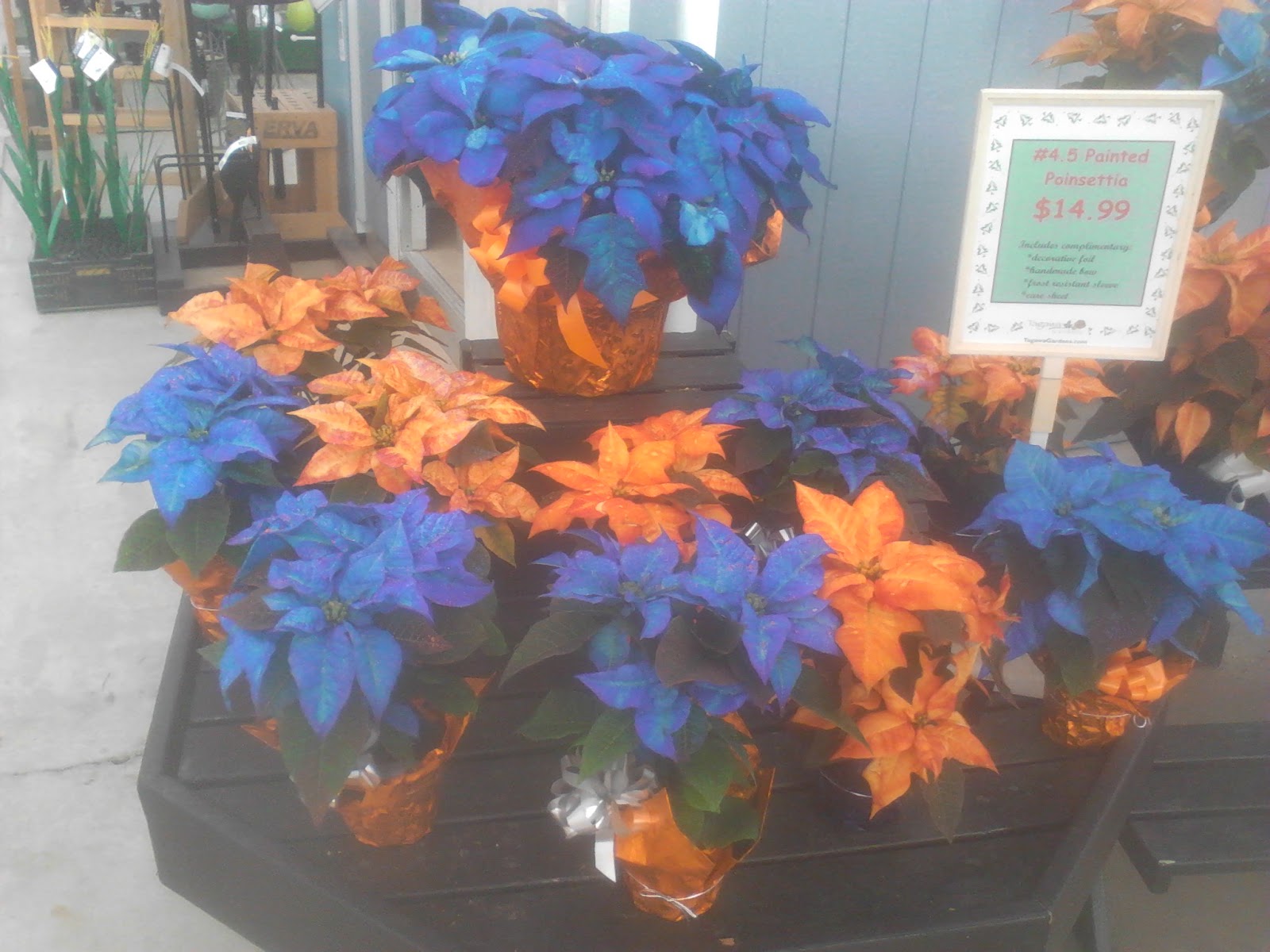
It is time to add those holiday plants to your home like amaryllis, paperwhites, Christmas cactus, and poinsettias. You may have seen the great varieties in color choices poinsettias come in. You can even get them in unusual colors that are painted.

IMG_20141206_105747.jpg

I have the fun job at a local garden center of painting and adding glitter to our poinsettias.  I am an organic gardener and permaculturist in addition to being a Colorado Master Gardener so it is always a concern for me what is being applied to our plants. At our center, we use vegetable based dyes that are specially formulated for poinsettias. We spray these dyes so we can achieve those beautiful purples, mauves, blues, and oranges.