Friday, June 29, 2018

Gardening Power to the People: The Power of Mulch


It's time to mulch! In this short video, Jill Knussman, Jeffco Master Gardener, gives you tips for using mulch in your garden.

Wednesday, June 27, 2018

Are You Unknowingly Harboring a Noxious Weed in Your Garden? by Donna Duffy


It’s easy to get hooked on flowers that are easy to grow, especially those that seem to be refreshingly trouble-free. Unfortunately, some of these qualify as invasive ornamental weeds, and their rapid growth causes a multitude of problems. These undesirable plants reduce native plant habitat, reduce habitat for wildlife, alter riparian areas, and cause problems in agricultural lands. Colorado Noxious Weeds are illegal to grow, even though they may be available on the internet and in some “big box” stores. Following are three Noxious Weeds to watch out for, and native and non-invasive alternatives you can grow instead.

Saturday, June 23, 2018

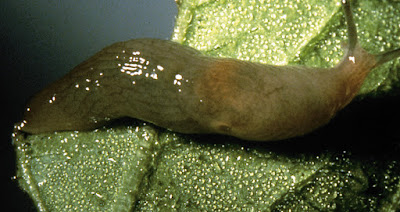
Controlling Slugs in the Garden by Carol King

Photo CSU Extension
The wet spring and continuing storms have provided a banner crop of sugs in gardens along the Front Range of Colorado.  I see their slime trails each morning glistening in the sunshine and see evidence of their voracious eating habits on my hostas in particular.

Slugs are very destructive and difficult to control. Seedlings of many vegetables and flowers are favored foods, and they feed on many fruits and vegetables prior to harvest. Even the slime trails produced by slugs can contaminate garden produce.

Dr. Whitney Cranshaw, Professor and Extension Specialist of Entomology at Colorado State University recommends the following:

9
Photo gardenmyths.com

Techniques for Slug Control:
Reduce moisture in the garden. Slug populations depend on moisture in the garden to thrive.  Any effort  to reduce the amount of moisture will help with the problem.  Use of drip irrigation and soaker lines and overhead watering early in the day will help reduce the humidity they thrive on.
Remove hiding places for slugs. Removing surface debris,avoiding organic mulches (straw, grass clippings) increasing air movement around plants and using trellises and wider plant spacing will help in reducing slug populations.
Use traps or trap boards to kill or concentrate slugs. Slugs are attracted to chemicals produced by many fermenting materials. Thus pans of beer or sugar-water can attract, trap and drown slugs. Place them throughout the plant to reduce slug populations. Alcohol is not the attractant to slugs; its the yeast fermenting in the beer. Boards and wet newspaper placed on the soil surface will have slugs that seek shelter under them. Check these shelters every morning and kill any slugs found.
Plant trap crops to divert slugs from main crops. Slugs love some plants more than others so planting them will divert slugs from your prized plants. Good trap crops include: green lettuce, cabbage, calendula, marigolds, comfrey leaves, zinnias and beans.
Use repellents or barriers. Slugs don’t like to travel over abrasive materials. Diatomaceous earth, wood ashes and similar materials placed around plants provide some protection. These materials must be kept dry however. 
Apply baits according to label directions. Molluscicides are pesticides effective against slugs and snails, and are offered for sale in most garden centers. Read labels carefully and apply as directed.  Many of these are harmful to pets and other wildlife and cannot be used on vegetables. Metaldehyde is the most commonly used and effective molluscicide. It is sold often in the form of granular baits (Bug-Geta, etc.) or as a paste or gel (Deadline, etc.) It is not to be used in the vegetable garden and is harmful to dogs in particular.  An alternative bait that recently has become available includes iron phosphate (ferric phosphate) as the active ingredient. Trade names include Sluggo, Slug Magic and Escar-Go!, among others. Iron phosphate products can be used around edible crops and do not pose special hazards to dogs. Ammonia sprays make excellent contact molluscicides, but must be applied directly to exposed slugs. Household ammonia, diluted to a 5 percent to 10 percent concentration, is effective for this purpose.
For more information about slug control read this fact sheet: http://www.ext.colostate.edu/pubs/insect/05515.html


Friday, June 22, 2018

Gardening Power to the People (Video): Insect Puddles

Did you know that insects need water to drink? An easy way for you to encourage pollinators in your garden is to make an "Insect Puddle." In this video, Colorado Master Gardener, Cathy Jo shows you just how to do it.


Thursday, June 21, 2018

Pollinator Week: Providing Water for Pollinators

Swallowtail drinking from a mud puddle, photo courtesy offset.com
Creating a pollinator-friendly garden goes beyond providing pollinator-friendly plants. Pollinators need sources of water for many purposes, including drinking and reproduction.  Butterflies, for example, will gather and sip at shallow pools, mud puddles or even birdbaths.  

Aphids in the Garden by Bernadette Costa

Aphid infestation, photo courtesy UMN Extension
As most of us have discovered, aphids are very common in home landscapes.  Sometimes called plant lice, they are small, soft-bodied, pear-shaped insects, generally less than 1/8” long.  Most are green or black but they can also be found in a variety of other colors as well.  A characteristic common to all aphids is the presence of cornicles, or tubes, on the back ends of their bodies, sort of like “tailpipes”.  These cornicles secrete substances that help protect the aphids from predators.  Over winter, aphids exist as eggs on perennial plants and hatch in the spring.

Wednesday, June 20, 2018

Colorado's Native Bees

Leaf Cutter bee with leaf, photo courtesy dakotabees.com

Colorado has over 950 species of bees, and all but a handful of these are native. Most of the few introduced (non-native) species that now call Colorado home were brought in accidentally. The most well-known non-native bee is the honey bee, an important pollinator of many of our agricultural crops, especially those that are also non-native. But our native bees, who for millions of years have co-evolved with our native flowering plants, are much more important, efficient, and effective pollinators for native fruits and vegetables. Many of these, like squash, tomatoes, and eggplants, cannot be pollinated by honey bees at all!

Tuesday, June 19, 2018

Save Our Pollinators: What You Can Do by Patti O'Neal

Photo by Donna Duffy
Do you enjoy any of these foods?  Avocados, Blueberries, Apples Cherries, Chocolate, Coffee, Peaches, Vanilla?  What if you did not have them any longer?  What would your world look like then? 
Did you know that insect pollinators – primarily social and solitary bees – are responsible for pollinating 35% of the world’s crop production, increasing outputs of 87 of the leading food crops worldwide as well as many plant-derived medicines.  At least one third of the world’s agricultural crops depends upon pollination provided by insects and other invertebrates.  

Monday, June 18, 2018

National Pollinator Week 2018: Gardening for Pollinators

Pollinators on Opuntia bloom, photo by Donna Duffy

June 18-24, 2018 has been designated National Pollinator Week. Now is the time to add pollinator-friendly plants to your landscape. Following are landscaping tips from the Colorado Native Plant Society and the USDA Forest Service to help you get started.

Gardening Power to the People: Trellis / Vertical Gardening (Video)

Trellising can be an important part of your vegetable garden. Not only does it help expand your planting space, it's a great way to grow many vegetables. Here's a video with Colorado Master Gardener Ed explaining may kinds of trellis.

Friday, June 15, 2018

DIY Rain Barrel Installation (Video)

Thinking of installing a rain barrel? This video from PlantTalk Colorado shows you how!

Wednesday, June 13, 2018

Conglobation (Think Pillbugs): June Word of the Month

Armadillidium vulgate, common pillbug, photo courtesy pbs.org

Conglobation is a term often associated with the common pillbug because of the way they roll up into a ball. This is called conglobation. Rolling into a ball is why many people call them 'roly-polies'. When pillbugs are threatened or bothered, they roll into a ball, likely to protect their soft inner body. Rolling into a ball could also limit water loss. When moving, they alternate between gradual right and left turns so that they end up moving straight forward.