Monday, September 28, 2015

Native Asters for Early Fall Color by Joyce D'Agostino


Now that fall is here, the flowers that can tolerate the cooler weather and shorter days may be few. But if you want to continue to enjoy flowers and color for a few more weeks asters make a great choice. 
Like chrysanthemums, asters bloom in late summer into early fall and have been a seasonal favorite for decades. They are a welcome addition of color when the annual flowers that need the warmth and more sun are winding down. Asters are great cut flowers for bouquets as well. 

Monday, September 21, 2015

Preventing Animal Damage in your Garden By Joyce D’Agostino

Squirrel damage photo Missouri Botanical Gardens
Few things are as disappointing to a gardener as to find a vegetable or fruit you were looking forward to harvesting has been destroyed by an animal. 
Depending on your area, the animals that can invade your garden can be as large as deer or small like voles, chipmunks and small rabbits. All of these animals are used to foraging plants and welcome any readily accessible source of edibles. These edibles often include many of your favorite plants including lettuce, greens, fruit and even tomatoes.
I first noticed few weeks ago that the squirrels seemed to be nipping off the heads of the sunflowers. Then shortly after, I found some tomatoes and peppers that had been pulled from the plants, a bite or two taken out of it and then left to rot.  This was especially disappointing when these animals seemed to be doing this on a regular basis and actually starting to thin out the fruit on the plants.

Saturday, September 19, 2015

Bumblebees in Your Late Summer Garden By Joyce D’Agostino

Bombus huntii photo bugGuide.net
There have been many articles written about the plight of the honeybees and the decline in their numbers. This is definitely a concern for all of us who love to see these bees active in our garden and pollinating the plants.
I read a recent article that stated now Bumblebees may be on the decline. Learning more about any pollinator will help us all have a more inviting and supportive environment for them to grow and thrive may help reverse this trend.
Bumblebees are very active pollinators and move fast through any plant where they are foraging.  It was difficult to snap a picture quickly enough to capture them in action because these bees can move fast in their effort to get the nectar and pollen before another competitor comes along. Like honeybees, they are social bees. Bumblebees have annual nests and they do make wax but they don’t produce honey and their value as a pollinator is still very important. 
You can hear a bumblebee active at work because they actually do make a noticeable buzz sound. They feed on nectar and gather pollen like other bees, but they are “buzz pollinators” and use their strong jaws to vibrate plants that other bees and pollinators may not be able to manage.  They are larger and fuzzier than honeybees and stand out with their yellow and black stripes and some have colorful markings. Colorado is home to a number of native bumblebees.
The attached articles give some great tips on which plants that certain pollinators like Bumblebees will be attracted to and ones that are not. By adding just a few more of these plants each year to your landscape, you can make a significant difference in the number of pollinators that visit your garden. 

Tuesday, September 15, 2015

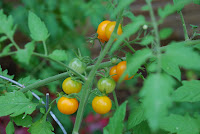
Pruning Tomatoes Does Help Ripening! By Joyce D’Agostino

As noted in the recent article on this blog   Need to Ripen Green Tomatoes? Let's Party! by Carol King” dated 9/10/15,  the methods suggested are excellent ones to help you speed some last minute ripening.  

After a cool spring which slowed down the tomatoes and other warm weather vegetables, and then very hot and dry weather, the tomatoes ib my garden seemed to be taking their time ripening. I had heard about pruning your tomatoes to give the plants a break from trying to keep producing and turn their energy into ripening.
I did some light pruning, mostly to the tops of the tomatoes where there was new growth, blooms and some tiny tomatoes. Knowing that these little tomatoes would probably not reach maturity at this point in the season, I pruned them off along with the blossoms and some of the stems and hoped that this would help focus this energy into the ripening process.
It took about 10 days – 2 weeks, but I was surprised and happy to find that the full sized tomatoes, which seemed to be turning color all too slowly, finally ripening much faster. The daytime weather staying warm helped as well even though the nights are beginning to cool. 

It’s hard to see an end to summer and the tomato season, but when you do get well into August and you have full sized tomatoes that are taking their time to ripen, doing some pruning really does help to speed the process. My attached pictures showing the plants just two weeks apart show that it works and I can recommend this process to anyone who wants some last minute tomatoes from their garden. 

Thursday, September 10, 2015

Need to Ripen Green Tomatoes? Let's Party! by Carol King


Perhaps, dear gardener, you have a plethora of unripe tomatoes in your garden. I do not. I got perhaps 50 tomatoes from my “Sweet 100s” (thinking of changing its name to “Sweet Tens”), exactly two “roma” tomatoes, and four “early girls”. I have one plant that did not set one single tomato. That is it; failure of great magnitude. If you were more successful than I, here are a few tips on dealing with green tomatoes.

To speed-ripen on the vine try these:
• Stop watering. This encourages ripening.
• Root prune the plant. Dig into the soil 6-8” deep and cut around a circle 12” from the stem. Shake the plant but don’t dig it up. This will stress the plant and the fruit will ripen faster.
• Pinch off any flowers, small fruit, new shoots, and suckers. It’s too late for them to become anything. Do this now and all the plants energy will go toward ripening.

When frost is expected, try these:
• Cover the plant completely and anchor so the wind doesn’t blow it off. Use old blankets, thick plastic, or anything similar and make sure it goes all the way to the ground providing the plant with trapped warmth.
• Harvest the tomatoes by pulling the plant from the ground and hanging it upside down in a garage or other shelter. Check often for ripe ones.
• Pick the pink ones and put them on the counter to ripen
• Pick the green tomatoes and store them in a shallow tray lined with newspaper. They need 60-70 degrees and no light. The warmth ripens them not light.    For more information, try these Fact Sheets:  http://www.ext.colostate.edu/ptlk/1832.html, http://www.colostate.edu/Dept/CoopExt/4dmg/VegFruit/ripening.htm, http://www.ext.colostate.edu/ptlk/1831.html. 

Thursday, September 3, 2015

Fall Cleanup Tips – Chapter II: The Annuals Ornamental Garden by Peter Drake

Photo courtesy colorthegarden.com
Beautiful to look at through the summer season, whether as a border to your house or walkway, or as an island on your lawn space, there is no need to despair when your annual ornamentals start wilting, browning and showing other signs of setting seeds and finishing out their life cycle.  

Wednesday, August 12, 2015

Common Garden Diseases and Solutions by Mary Small


POWDERY MILDEW- White or gray, flour-like substance on leaves, stems, flowers. Thin plant if growth is dense. Keep water out of plant canopy or apply it when it will dry fast. Apply sulfur or potassium bicarbonate or horticultural oils at first sign of mildew.


EARLY BLIGHT(tomato)- Lower leaves yellow; spots of concentric rings found on lower leaves. Keep water off foliage, or apply when it will dry fast. Chlorothalanil fungicide may be applied at first sign of infection.


FIREBLIGHT(crabapple)- Stem tips brown, bend over like shepherd’s crook and shrivel. Drops of bacterial ooze on branches. Prune branch 6-12 inches below visible signs of infection. Treat pruning tool between cuts with 1:9 bleach mixture or rubbing alcohol. (Clean tools when done.) Thin tree branches. Avoid over-fertilization.


CYSTOSPORA CANKER(aspen, cottonwood)-Sunken discolored areas on trunk and/or branches. Dark “pimples” found in cankered area. Branch dieback. Prune out affected branches below visible signs of infection. Keep tree healthy.


LEAF SCORTCH-Leaves brown on edges and in between veins. Often found in hot dry weather. Apply water to plant’s root zone during hot dry weather or when scorch appears.

Friday, August 7, 2015

The Noises of August by Donna Duffy


Cicada, photo courtesy CSU Extension

You’ve probably noticed that it's a noisy place out in the backyard with all that insect racket going on. Interestingly, only a few groups of insects communicate by rubbing their body parts together. What you are hearing are most likely cicadas, crickets and katydids. As you might suspect, it’s the males making all that commotion!

Wednesday, August 5, 2015

Aphids on Shade Trees By Joyce D’Agostino

Aphids photo by Joyce D'agostina
This summer I noticed some distinctive leaf curling on one of our shade trees. In checking it confirmed that there were aphids (lots of them) infesting this tree. The leaf curling in one sign of the damage that these insects can do. It is not only unsightly but left unchecked it can do damage to your tree.
Fortunately there are some solutions to reducing or ridding these insects from your plants. Aphids are very small, soft bodied insects. Using your hose on a hard stream, you can target the areas with a strong blast of water. This is very effective and if used regularly will reduce the population of these insects on your trees and plants. Check an area first with the water hose setting to ensure that you don’t damage the plant.  I noticed when I used this method that it did help remove a lot of the aphids from the curled leaves.  
Ladybeetles and Green Lacewings are also great natural predators of aphids. If you see these insects in your garden, moving them to the aphid area is very helpful.  Both of these insects are known to be able to eat a large amount of aphids, so make them a great non chemical use to help with aphid control.
Refer to these bulletins for more information on identifying and controlling the aphids.

Sunday, July 19, 2015

Dividing Perennials by Donna Duffy


If your garden looks like mine, you probably have lots of overgrown perennials. The abundance of rain during the past couple of months has encouraged lots of plant growth. Take a walk around your garden and make note of plants that are ready to be divided.

Friday, July 17, 2015

Aphids Abound by Carol King

Aphids


Aphid Honeydew on Ivy

 Sitting in my backyard has become an unpleasant experience.  I have lots of deciduous  trees and they all seem to have a large crop of aphids.  One evening as I looked toward the sun, I could see the aphid “honeydew”  (poop actually) pouring down like a gentle rain! When I come in from outside, I feel as if I am covered with aphids!  Is there a variety that feeds on humans?

Thursday, July 16, 2015

Ascochyta Leaf Blight Damages Lawns by Mary Small

Aascochyta Leaf Blight in Bluegrass
Cool moist weather followed by hot dry weather often spells Ascochyta leaf blight on turf. The fungal disease kills leaf blades, creating irregular patches of straw colored turf. Fortunately, Ascochyta does not kill the crowns or roots of plants, so they will eventually recover within a couple of weeks.

To manage the disease, mow lawns 3 inches tall, making sure mower blades are sharp. (Dull mower blades create ragged tips on grass plants, providing the fungus more entry points.)

Keep the turf evenly moist. Check sprinkler heads to make sure they are working correctly, are not clogged, tipped or broken. It's better to water deeply and infrequently. Shallow watering encourages shallow rooting which makes plants more susceptible to drying out. Too much water in poorly drained soils can increase disease development. For more information about Ascochyta, see this CSU Extension fact sheet.